
HOW TO DO BOXING FOOTWORK FOR BEGINNERS GUIDE TO MASTER RING MOVEMENT
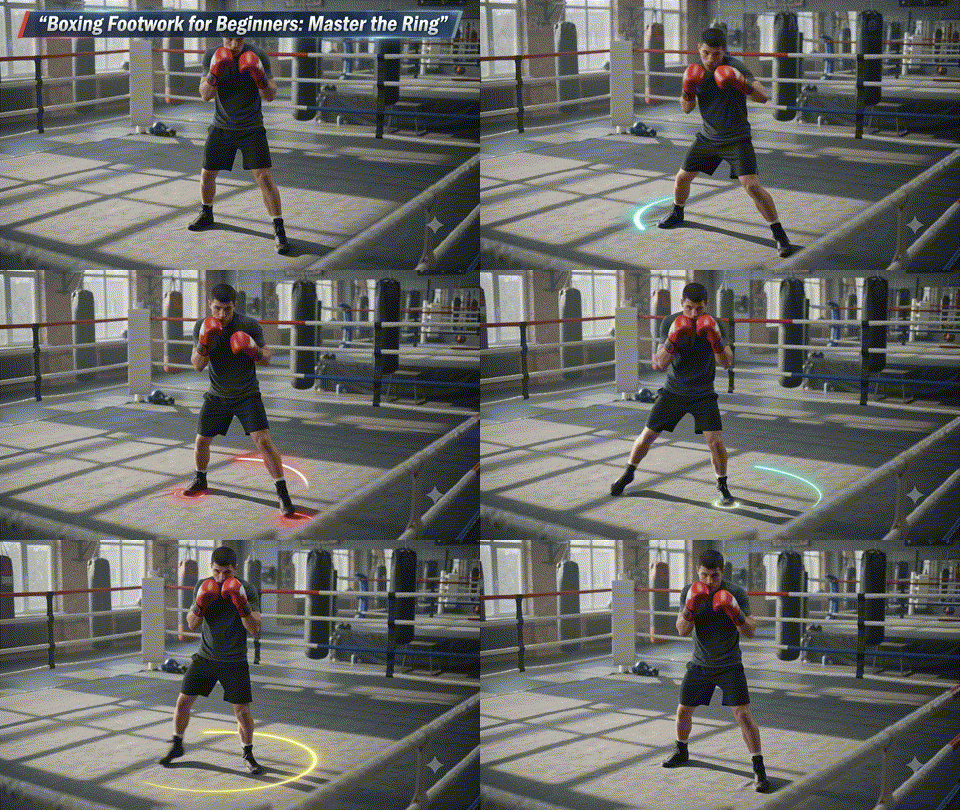
how to do boxing footwork for beginners is the most critical milestone on your combat sports journey. Your feet are not just transportation; they are your primary defensive guard and the launchpad for all of your punching power. Without dynamic, balanced movement, you are simply a stationary target waiting to be hit. This comprehensive guide will dissect the structural, physical, and tactical mechanics of ring movement, ensuring you build an athletic foundation that keeps you light on your toes and ready to dominate.
KEY TAKEAWAYS
- The Stance Dictates the Steps: Proper boxing footwork always begins with a perfectly balanced stance, keeping your weight centered on the balls of your feet.
- Master the Micro-Movements: Maintain a consistent 6-to-8 centimeter range for basic steps to prevent over-extension and keep your base fully balanced.
- Never Cross Your Feet: Crossing your feet during lateral movement instantly ruins your center of gravity, leaving you highly vulnerable to counterpunches.
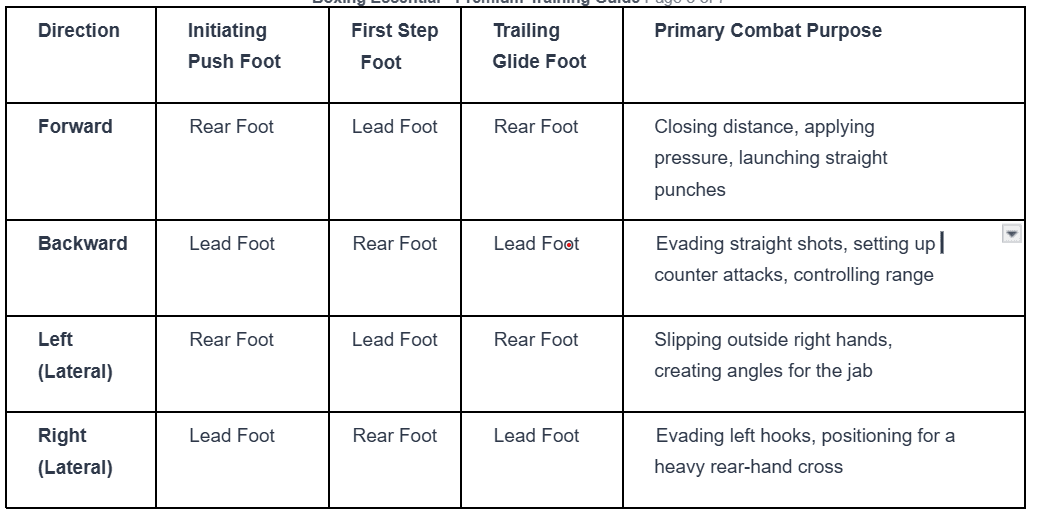
- Push and Glide Mechanics: Push off your rear foot to move forward, and push off your lead foot to move backward. Always let the trailing foot glide effortlessly to maintain stability.
- Drills Build Rhythmic Mastery: Dedicate consistent rounds to the agility ladder, the classic 4-square drill, and shadow boxing to lock in muscle memory.
Establishing the Ultimate Boxing Footwork Foundation
To move gracefully across the canvas, you must start with a stance that balances offensive leverage with defensive coverage. A proper athletic posture allows you to shift weight seamlessly, absorb heavy impact, and counter-attack with explosive power. The most common pitfall for novice fighters is neglecting their basic stance before initiating complex steps, which compromises balance and limits punching range. If you want to refine your combat base, visit Boxing Essential for detailed visual guides on structuring your body alignment and positioning for optimal efficiency in the ring.
Finding Your Perfect Feet Alignment
- Symmetric Offsets: Place your non-dominant foot roughly 6 to 8 inches in front of you. If you are right-handed (Orthodox), your left foot will lead. If you are left-handed (Southpaw), your right foot leads.
- The 45-Degree Angle: Position your lead foot pointing forward at a 45-degree angle to your opponent. Your rear foot should sit at roughly an 80 to 90-degree angle, giving you lateral stabilization.
- The Toe-to-Heel Line: Avoid standing on a metaphorical tightrope. Draw an imaginary line straight down the middle of your stance; your front heel should never cross this line, and your rear toe must remain offset to the side to preserve your lateral balance.
- Shoulder-Width Spacing: Ensure your feet are positioned slightly wider than shoulder-width apart. Stepping too wide locks your hips and slows down your movement, while standing too narrow makes you exceptionally easy to knock off balance.
Perfecting Body Weight Distribution
Maintaining a centered weight distribution is critical when learning how to do boxing footwork for beginners. Keep your spine perfectly upright, ensuring your head and nose never lean past your lead knee. Your knees should remain slightly bent to lower your center of gravity, which helps absorb incoming force and allows you to spring forward. Distribute your weight evenly (50/50 or slightly 45/55 favoring the rear leg) across the balls of both feet, and ensure your rear heel is slightly elevated off the floor at all times. This raised heel acts like a loaded spring, giving you the ability to launch forward instantly.
PRO-TIP: THE PENCIL TEST: Place a pencil under your rear heel while practicing your shadow boxing stance. If the pencil gets crushed flat against the canvas, you are sitting on your heels too much. Keep your heel elevated to maintain a springy, highly responsive athletic base
The Golden Rules of Movement: Step, Slide, and Glide
Once your stance is secure, you must learn to move in all four directions forward, backward, left, and right without disrupting your structural base. The core mechanical rule of boxing mobility is simple: the foot closest to your target direction always steps first, and the opposite foot glides to catch up. This structural pattern prevents your legs from crossing and ensures your feet maintain their shoulder-width spacing throughout the transition. Practice these steps slowly to build deep motor patterns before trying to increase your velocity.
Moving Forward (In-Range Adjustments)
To close the distance on an opponent, you must initiate the step by pushing off the ball of your rear foot. Elevate your lead foot slightly (just a few millimeters off the canvas) and let the rear foot push your entire body weight forward. Land on the ball of your lead foot and immediately slide your rear foot forward to its original starting position. Both feet should glide smoothly across the floor rather than leaping, keeping your center of gravity low and stable.
2. Moving Backward (Tactical Retreats)
When you need to evade a punch or create defensive space, reverse the forward motion. Push sharply off the ball of your lead foot, sending your body weight backward. Step back with your rear foot first, and then glide your lead foot back to restore your standard stance. Keep your eyes locked on your opponent's chest throughout the transition, and avoid the common mistake of leaning your upper body backward as you retreat.
3. Moving Laterally to the Left
To move left as an Orthodox fighter, you must step with your lead (left) foot first. Push off the inside ball of your rear foot, glide your lead foot to the left, and immediately drag your rear foot to the left to re-establish your shoulder-width stance. Moving left is an exceptional way to angle away from an opponent's straight right hand while setting up your own defensive counters.
4. Moving Laterally to the Right
To glide to your right, push off the inside ball of your lead (left) foot. Step to the right with your rear foot, and then slide your lead foot over to match the movement. This lateral shift allows you to move away from a southpaw's power hand or align your body to land a clean, powerful rear-hand hook or cross.
Premium Training Guide
The Anatomy of Micro-Movements Why Smaller is Safer
When studying top-tier fighters like those featured on the Boxing Essential Micro-Movements Guide, you will notice that their strides are rarely large or dramatic. Instead, they rely on tiny, precise adjustments. A fundamental concept of master-level ring movement is keeping your steps incredibly small ideally between 6 to 8 centimeters per movement. Making massive, lunging steps is a dangerous habit that leaves you completely defenseless while your feet are wide apart.
When you take large steps, your feet naturally spread too far apart, which temporarily takes away your ability to pivot, slip, or throw punches with real power. Smaller, controlled strides keep your hips centered directly over your feet, ensuring you remain balanced enough to strike or defend at any split second. Additionally, keeping your feet close to the canvas allows you to react instantly to sudden changes in your opponent's positioning. Focus on making quiet, efficient adjustments that conserve your stamina and keep you structurally secure during exchanges.
Mastering the Pivot Creating Angles of Attack
Pivoting is the ultimate boxing transition that bridges defense and offense. Instead of moving in simple straight lines, pivoting allows you to rotate your body to create new, unexpected angles of attack while staying completely out of your opponent's line of fire. It is the exact mechanic that allows slick fighters to make their opponents punch empty air and instantly pay the price with a heavy counter.
To execute a flawless lead-foot pivot, follow these step-by-step mechanical guidelines:
- Keep Your Weight Forward: Transfer roughly 60% of your body weight onto the ball of your lead foot. Your lead heel should rise slightly off the canvas to act as your central axis
- The Rotary Push: Push off the ball of your rear foot to swing your hips and rear leg around. Imagine your lead foot is pinned to the floor by a central spike, and you are rotating your body around that exact point.
- Angle Adjustment: Swing your rear leg roughly 45 to 90 degrees to the side. The angle you choose depends entirely on whether you are evading a lunging attack or establishing a hook.
- Restore the Guard: As your rear foot lands, instantly drop your weight back to a 50/50 distribution and bring your hands back up to a tight defensive guard
If you need step-by-step illustrations or want to see detailed biomechanical breakdowns of these movements, refer to the visual instructions on Boxing essential How's Boxing Footwork Visual Tutorial. Practicing these pivots in front of a mirror will help you spot and correct any alignment mistakes early on.
Highly Effective Boxing Footwork Drills for Beginners
No amount of technical knowledge can replace deliberate, high-repetition practice. To turn these mechanical steps into smooth, instinctive reactions, you must incorporate specific boxing footwork drills into your daily training schedule. These exercises are specifically designed to build agility, balance, and the calf endurance required to stay active through multiple rounds of shadow boxing or sparring.
1. The Agility Ladder Drill
The agility ladder is a gold-standard training tool for developing foot speed, coordination, and coordination. Lay the ladder flat on the floor and practice high-precision footwork sequences. Start with a simple "two feet in, two feet out" lateral shuffle, ensuring you stay on the balls of your feet and keep your hands held high in a defensive guard. Focus on maintaining a clean rhythm and precision, making sure your feet never clip the rungs of the ladder as you move.
2. The 4-Square Grid Drill
This classic drill is highly praised in the Boxing Essential Beginner Drills Collection for its ability to build multi-directional balance. Tape a large 2x2 meter square on the floor and divide it into four equal quadrants. Stand in your standard boxing stance in the bottom-left quadrant. Practice stepping forward, laterally, and diagonally across the boxes, keeping your stance width perfectly consistent. This exercise forces you to maintain an athletic base without relying on visual cues, training your body to feel where its center of gravity
3. Shadow Boxing with Floor Lines
Find a straight line on the gym floor or lay down a strip of handwrap tape. Position yourself so the line runs directly between your lead heel and your rear toe. As you move forward, backward, and throw combinations, monitor your relationship to the line. If your lead foot crosses over the line, you are off balance if your rear foot drifts too far away, your stance is too wide. This simple visual cue is incredibly effective for self-correcting alignment mistakes in real-time.
Crucial Common Mistakes to Avoid
As a beginner, your brain is processing a huge amount of sensory information at once managing your guard, watching your opponent, and trying to land clean punches. Because of this cognitive load, it is incredibly easy to fall into bad footwork habits that are very difficult to break later on. Watch out for these critical mistakes during your training sessions:
- Crossing Your Feet: Crossing your legs completely compromises your balance. If you get hit while your feet are crossed, you will inevitably fall, regardless of how tough you are.
- Flattening Your Back Foot: Letting your rear heel touch the floor completely kills your explosiveness and locks you in place. Keep that back heel elevated to remain springy and reactive.
- Leaning Your Nose Past Your Knees: Bending at the waist to reach with punches throws your weight forward, leaving you highly vulnerable to counter-attacks and damaging balance disrupting slips.
- Bouncing Too High: Jumping off the canvas wastes precious energy and leaves you temporarily unable to change directions or throw punches mid-air. Keep your glides low and close to the floor.
Conclusion
Mastering how to do boxing footwork for beginners is not about pulling off flashy, high-speed maneuvers; it is about building a highly disciplined, incredibly consistent athletic foundation. By focusing on keeping your stance balanced, mastering precise micro-movements, and practicing multi directional drills, you will develop the physical coordination and muscle memory needed to control the ring. Keep your knees bent, stay light on the balls of your feet, and remember that every great knockout punch starts from the ground up. Dedicate the time to perfect your movement, and your defense and offense will reach an entirely new level.
Frequently Asked Questions
Q:How long does it take to learn basic boxing footwork?
With consistent, dedicated practice (at least 3 to 4 training sessions per week), most beginners can master the basic step-and-glide mechanics and simple pivots within 4 to 6 weeks. However, developing the relaxed, fluid movement of an experienced fighter is a continuous journey that requires months of shadow boxing, heavy bag training, and controlled sparring.
Q:Why do my calves hurt so much when I start boxing?
Boxing requires you to spend almost all of your time bouncing and moving on the balls of your feet, which puts a massive amount of stress on your calves (specifically the gastrocnemius and soleus muscles). This discomfort is completely normal for beginners. To build up your endurance and prevent injury, make sure to jump rope regularly, roll out your calves, and perform thorough dynamic stretching before and after every workout.
Q:Should I practice footwork with or without boxing gloves?
You should absolutely practice both ways. Training without gloves allows you to focus purely on your lower body alignment and coordination. However, practicing with your gloves on is essential because the extra weight shifts your center of gravity slightly and helps you learn to maintain a tight, realistic guard while moving.
Q:Is jumping rope actually necessary for boxing footwork?
Yes, jumping rope is one of the most effective conditioning tools for combat sports. It builds the calf endurance, ankle stability, and wrist-to-foot coordination required for high-level ring movement. Additionally, the rhythmic jumping action perfectly mimics the bouncing motion used to glide in and out of range during a fight.
Related Articles
 Boxing Training
How to throw a Boxing Hook The Complete Masterclass for Speed, Power, and Precision
In the sweet science of boxing, few weapons command as much respect and raw awe as a perfectly executed hook. It is the signature punch of legends like Mike Tyson and Joe Frazier a looping, devastating strike that bypasses an opponent's straight guard to land flush on the jaw or ribs.
 Boxing Training
Top 11 Best Boxing Gyms in Sunnyvale, CA for Training
Finding the Best Boxing Gyms in Sunnyvale can be a game-changer for your fitness journey. Whether you’re aiming to learn self-defense, improve endurance, or train like a professional fighter, Sunnyvale offers several high-quality boxing gyms equipped with experienced coaches and modern facilities.
 Boxing Training
Top 11 Best Boxing Gyms in Stockton, CA for Training
Finding the Best Boxing Gyms in Stockton can completely transform your fitness routine, self-defense skills, and overall health. Stockton, California has developed a strong boxing culture with gyms that cater to beginners, amateur fighters, and professional athletes.