
Boxing vs Wrestling Is Better for Strength
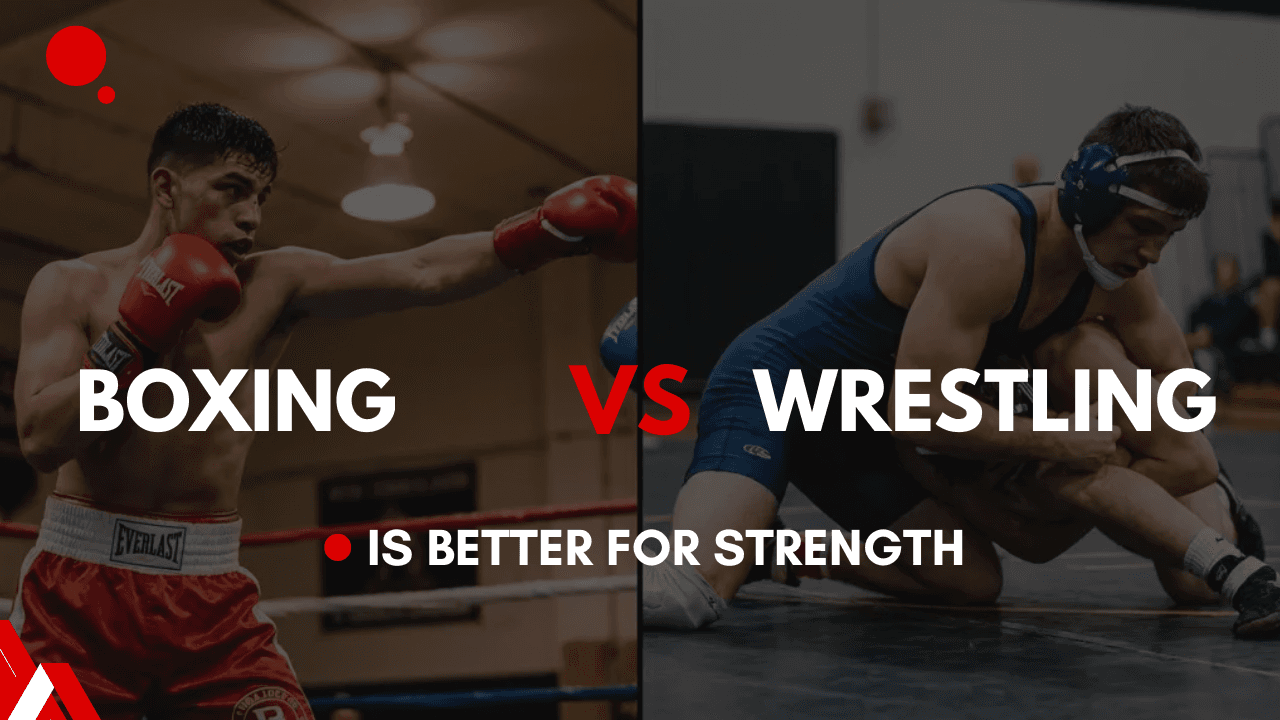
Although these combat sports differ, they are closely related. They are both Olympic sports, and boxing and wrestling techniques are the foundation of MMA sports. Therefore, the answer to the question of which sport is better, boxing or wrestling, is clear: it depends on the needs and goals of the fighter.
Are you aiming to lose weight, get in shape, master new skills, compete, and stay fit? The knowledge about differences between boxing and wrestling will help you achieve your goals.
I will discuss the differences between these sports and explain the advantages and disadvantages of each regarding strength, fitness, self-defense, injuries, costs, job opportunities, and other factors. Moreover, we will take a closer look at scientific and expert opinions about the comparisons of boxing and wrestling. This information will allow us to create a comprehensive view of the benefits and drawbacks of wrestling and boxing and determine which sport is better: boxing or wrestling.
Key Takeaways
- I find that boxing is perfect for developing quickness, striking, footwork, and stamina.
- Wrestling will make you stronger in other ways such as balance and power.
- I feel that wrestling can be done in intervals which burns more calories.
- Moreover, boxing will provide you with better movement and range of motion to keep the opponent at a distance, while wrestling allows for a better close-range fight.
- Finally, the two combat sports are complementary and can be combined to achieve a greater effect.
What Is Boxing?
Boxing is a combat sport where two opponents score points and knockouts by striking their opponent with fists. The two boxers fight each other in a square ring and have to use special boxing gloves, a mouthpiece, and other equipment depending on the degree of boxing.
The boxing sport itself is one of the most ancient kinds of sports, and today it is one of the most prestigious sports in the world. Now, boxing matches are held under the control of the International Boxing Association (IBA) which is the main organization managing boxing activities at present. However, there are some other boxing associations at different levels which are responsible for managing boxing matches at their levels. For example, at the national level, there is the USA boxing association which manages boxing events in the country. At the international level, the World boxing council (WBC), World boxing Association (WBA), the International boxing federation (IBF) and the World boxing organization (WBO) are also present.
Basic Rules of Boxing
The objective is to knock down an opponent or to knock out or technically knock out an opponent.
A competitor may strike with punches to the body or head above the belt. They are forbidden to strike their opponent in any of the following:
- Punch below the belt
- Holding
- Headbutting
Punching after the referee stops the fight
Most professional bouts last 4 to 12 rounds, while amateur fights are usually shorter than the professional ones.
Core Boxing Techniques
Although boxing seems simple, it has many intricacies that can only be achieved through a lifetime of training. Each boxing technique must be learned for a long time, as it involves harmonious, coordinated movements, quickness and precision, as well as special tactics.
Jab
Jab is the simplest punch in boxing which, however, is used most often. It is employed to create space for other punches or to close the distance between the fighters.
Cross
A powerful straight rear-hand punch delivered from the hips in a rotational motion.
Hook
A swinging punch thrown to the side of the opponent’s head or body, frequently used in close quarters to drive an adversary back.
Uppercut
An upward thrust of the fist aimed at the opponent’s chin, particularly effective against a forward-leaning opponent.stance.
Defensive Skills in Boxing
The best boxers are those who know not only how to properly throw punches but also how to avoid them. Some of the techniques used in boxing to dodge and avoid an opponent’s punches include the following.
slipping punches,
bobbing and weaving,
blocking,
parrying,
footwork,
keeping a proper distance.
These techniques help boxers react to incoming punches faster and avoid them.
Boxing Training Methods
A typical boxing training session develops both aerobic and anaerobic fitness. Workouts often include:
- Heavy bag training
- Speed bag drills
- Shadowboxing
- Jump rope exercises
- Pad work with a coach
- Sparring sessions
- Strength and conditioning
- Core stability exercises
- Sprint intervals
Professional boxers often train five to six days per week, combining technical drills with high-intensity conditioning.
Physical Benefits of Boxing
Consistent boxing training offers numerous health and performance benefits:
- Improves cardiovascular endurance
- Develops explosive punching power
- Enhances hand-eye coordination
- Increases agility and balance
- Burns significant calories
- Strengthens shoulders, arms, and core
- Builds mental discipline
- Improves reaction speed
Research published by the American College of Sports Medicine suggests that high-intensity boxing workouts can burn approximately 500–800 calories per hour, depending on body weight and workout intensity.
What Is Wrestling?
Wrestling is one of the oldest kinds of combat sports in the world. This sport has been included in the programme of the Olympic Games since 1896. When comparing boxing and wrestling, the second one has such a feature that persons participating in it do not hurt their rivals, but they use their techniques to fool or throw them away and use their own force.
There is no single way to win in wrestling, but most techniques are based on balance, strength, and strategy.
Main Objective of Wrestling
The goal is to control your opponent using grappling techniques such as:
- Takedowns
- Throws
- Clinches
- Pins
- Escapes
- Reversals
Matches are won through points, technical superiority, or pinning an opponent's shoulders to the mat.
Popular Wrestling Styles
Freestyle Wrestling
Freestyle wrestling enables wrestlers to utilize all parts of their body when attacking their opponent. Attacks to the legs are allowed, including picking up the opponent by the legs and throwing them. It is the most violent style of wrestling that permits throws and takedowns that make the most use of the lower body.
Greco Roman Wrestling
In Greco-roman wrestling, holds and throws from the bottom are prohibited. Therefore, it is necessary to use the upper body to throw the opponent. This style requires core and upper body strength
Folkstyle Wrestling
This style is popular among American schools and colleges. The focus is on control, riding time, and escapes. It is different from the styles used in international competitions.
Wrestling Training Methods
A wrestling practice is physically demanding and typically includes:
- Takedown drills
- Live wrestling rounds
- Grip strength exercises
- Functional strength training
- Conditioning circuits
- Balance and agility drills
- Neck strengthening
- Flexibility and mobility work
Unlike boxing, wrestling practices involve nearly constant physical contact, making them some of the most intense workouts in sports.
Physical Benefits of Wrestling
Wrestling develops athletic abilities that transfer well to nearly every sport.
Benefits include:
- Exceptional full-body strength
- Superior grip strength
- Explosive power
- High muscular endurance
- Improved flexibility
- Better balance and coordination
- Strong cardiovascular fitness
- Mental resilience under pressure
Sports science research consistently ranks wrestling among the most physically demanding athletic disciplines due to its combination of anaerobic power, endurance, and continuous resistance against an opponent.
Boxing vs Wrestling At a Glance Comparison
Feature
Boxing
Wrestling
Combat Style
Striking
Grappling
Primary Goal
Knockout or points
Takedown, control, pin
Olympic Sport
Yes
Yes
Main Skills
Punching, footwork, defense
Takedowns, control, leverage
Equipment Required
Gloves, wraps, mouthguard
Wrestling shoes, headgear (optional in some competitions)
Physical Contact
Moderate
Continuous
Cardiovascular Demand
Very High
Extremely High
Strength Development
High
Very High
Learning Curve
Moderate
Steep
Self-Defense Value
High
Excellent
Boxing vs Wrestling for Strength
When people compare boxing vs wrestling, one of the biggest questions is which sport builds more strength. While both improve athletic performance, they do so in different ways.
How Boxing Builds Strength
The game of boxing develops explosive power rather than maximum strength. All punches in boxing are delivered with force from the legs through the hips, core, shoulders, and finally the fists.
- As a result, boxing will improve your:
- Rotational power/core strength
- Shoulder endurance
- Speed and quickness of the arms
- Hips’ explosive power
- Lower body balance and stability
- Fast twitch muscle fibers
It also works the chest, triceps, back, and abs, giving you a combination of power and muscular endurance. But it prioritizes fast muscle movements over brute force.
How Wrestling Builds Strength
Unlike other sport activities, wrestling develops what is commonly referred to as functional strength or the ability to move, pull, lift, sprawl, and twist another man’s body weight. A wrestler is constantly pulling, pushing, lifting, twisting, sprawling, and balancing himself over his partner during training.
This type of exercise develops:
- exceptional upper body strength through intense grip,
- powerful legs and hips,
- strong upper backs and cores,
- and stable necks.
It also develops unrivaled power and endurance. In addition, wrestlers have functional strength; they can develop their ability to pull themselves up and over another man’s back or drive their hips into an opponent’s body with unnatural effectiveness. Moreover, they must react and adapt to whatever their partner throws at them, making their strength development more practical.
Expert Insight
Strength coaches frequently regard wrestling as one of the most physically demanding sports because it combines resistance training, cardiovascular conditioning, and body control in every session. Boxers, meanwhile, excel in explosive speed, striking power, and endurance.
Who wins for overall strength? If your primary goal is to build maximum functional, full-body strength, wrestling has the edge. If you prioritize explosive power, speed, and striking efficiency, boxing is the better choice.
Boxing vs Wrestling for Fitness
If your aim is to improve the state of your health, both boxing and wrestling are great options. They have different approaches, however, with boxing being more focused on developing your stamina, speed, and agility, while wrestling trains your power, balance, and overall body conditioning.
It depends on what you value more; a highly conditioned body and better stamina or improved athletic power and control.
Cardiovascular Endurance
Cardiovascular fitness measures how efficiently your heart and lungs deliver oxygen during prolonged physical activity.
Boxing Cardio
Boxing workouts are famous for their intensity. A typical session includes:
- Jump rope
- Shadowboxing
- Heavy bag rounds
- Mitt work
- Sparring
- High-intensity interval training (HIIT)
These activities keep your heart rate elevated for extended periods, improving aerobic and anaerobic endurance. Boxers learn to recover quickly between rounds while maintaining explosive output.
Wrestling Cardio
Wrestling places continuous demands on the cardiovascular system because athletes rarely stop moving. Every exchange involves pushing, pulling, lifting, sprawling, scrambling, and resisting an opponent's force.
Unlike boxing, where distance management creates brief recovery moments, wrestling often involves constant physical contact with very little rest.
Winner: Wrestling has a slight advantage for total-body cardiovascular conditioning due to its continuous resistance-based workload.
Boxing vs Wrestling for Weight Loss
One of the most common questions beginners ask is which sport burns more calories.
The answer depends on workout intensity, body weight, training duration, and experience level.
Average Calories Burned Per Hour
Activity
Estimated Calories Burned*
Recreational Boxing
500–700
Competitive Boxing
700–900
Wrestling Practice
600–900
Competitive Wrestling
800–1,000+
*Estimates vary based on body weight, intensity, and workout structure.
Why Wrestling Often Burns More Calories
Wrestling sessions involve:
- Constant gripping
- Bodyweight resistance
- Explosive takedowns
- Continuous scrambling
- Limited recovery time
This combination creates a higher overall energy demand.
Why Boxing Is Excellent for Fat Loss
Although wrestling may burn slightly more calories in many sessions, boxing is often easier to sustain consistently because:
- Gyms are widely available.
- Classes are beginner-friendly.
- Workouts can be adjusted to different fitness levels.
- Training places less stress on joints than frequent grappling.
For many people, long-term consistency leads to better weight-loss results than choosing the workout with the highest calorie burn.
Boxing vs Wrestling for Self-Defense
Self-defense is one of the biggest reasons people begin training in combat sports.
The answer isn't simply "boxing" or "wrestling." Each discipline excels in different situations.
Boxing Advantages
Boxing teaches you how to:
- Generate powerful punches.
- Control distance.
- Move efficiently.
- Avoid incoming strikes.
- React quickly under pressure.
A skilled boxer can often end a confrontation before an attacker closes the distance.
Boxing Is Best When:
- You have space to move.
- There is a single attacker.
- You can maintain distance.
- Quick strikes can create an opportunity to escape.
Wrestling Advantages
Wrestling develops:
- Takedown defense.
- Balance.
- Body control.
- Clinch fighting.
- Ground control.
- Escape techniques.
Many real-life altercations quickly become close-range encounters. Wrestlers are trained to stay balanced, prevent takedowns, and control opponents without relying on punches.
Wrestling Is Best When:
- Someone grabs you.
- The fight moves into a clinch.
- An opponent attempts a takedown.
- Physical control is more effective than striking.
Real World Self Defense Scenarios
Someone Throws a Punch
A boxer's defensive footwork and head movement can help avoid the strike while creating an opening to escape or counter.
Someone Rushes Forward
A wrestler is generally better equipped to defend against body locks, clinches, and takedown attempts.
Confined Spaces
In tight areas such as hallways, elevators, or crowded environments, wrestling skills often become more practical because there is little room for movement.
Multiple Attackers
Neither sport guarantees safety, but boxing's mobility may make it easier to create distance and escape. Wrestling can become more difficult when controlling one attacker while others are nearby.
Verdict
For striking and distance management, boxing has the advantage.
For close-range control and grappling, wrestling is superior.
For real-world self-defense, combining both provides the most complete skill set.
Boxing vs Wrestling for Endurance
Endurance isn't only about running long distances. Combat sports require the ability to produce repeated bursts of effort while recovering quickly.
Boxing Develops
- Aerobic endurance
- Explosive recovery
- Punch volume
- Footwork endurance
Wrestling Develops
- Muscular endurance
- Grip endurance
- Full body stamina
- Anaerobic conditioning
Winner
If your goal is long lasting muscular endurance under resistance, wrestling has the advantage.
If your goal is maintaining speed, movement, and striking power over multiple rounds, boxing excels.
Injury Risks Boxing vs Wrestling
Every combat sport carries some level of injury risk. Understanding these risks helps athletes train smarter and recover properly.
Common Boxing Injuries
- Hand fractures
- Wrist sprains
- Shoulder strains
- Facial cuts
- Nose injuries
- Rib bruises
- Concussions
Repeated head impacts make concussion awareness especially important in boxing.
Common Wrestling Injuries
- Knee ligament sprains
- Shoulder dislocations
- Neck strains
- Finger injuries
- Ankle sprains
- Skin infections (if hygiene protocols are ignored)
Because wrestling involves constant grappling, joint-related injuries occur more frequently than striking injuries.
Which Sport Is Safer?
Neither sport is completely safe.
It is more likely in boxing for a person to suffer a concussion due to the heavy blows to the head, whereas in wrestling the chance of getting a concussion is lesser but the chance of getting injured to one’s ligaments and joints is higher. The sport coaches can help avoid such injuries by developing warm up sessions, training, and using special equipment.
Mental Benefits of Boxing and Wrestling
Physical improvements are only part of the equation. Both sports strengthen the mind in different ways.
Boxing Improves
- Confidence
- Emotional control
- Focus
- Patience
- Stress management
- Reaction spee
Wrestling Develops
- Discipline
- Determination
- Problem solving
- Adaptability
- Resilience
Athletes learn to recover mentally after setbacks and remain composed during physically demanding exchanges.
Cost of Training
Budget can also influence your decision.
Boxing Costs
Typical expenses include:
- Boxing gloves
- Hand wraps
- Mouthguard
- Gym membership
Many gyms offer flexible memberships and beginner classes, making boxing relatively accessible.
Wrestling Costs
Equipment requirements are generally minimal:
- Wrestling shoes
- Headgear, depending on the club or competition
- Athletic clothing
- On the contrary, unfortunately, the wrestling clubs are not so popular as boxing clubs in some places
What is more affordable?
The equipment is the same, however, in general, it is easier to find a boxing club; accordingly, it is cheaper.
Can You Train Boxing and Wrestling Together?
- I can absolutely imagine them doing and many elite level athletes do.
- MMA fighters often cross train because they are very effective.
- Benefits of cross training (boxing plus wrestling)
- Increased overall conditioning
- Better self-defense
- Improved balance and coordination
- More adaptable when facing different opponents
- Better athletic performance
Weekly Example Schedule
Day
Training Focus
Monday
Boxing Technique
Tuesday
Wrestling Drills
Wednesday
Strength & Conditioning
Thursday
Boxing Sparring
Friday
Wrestling Live Training
Saturday
Recovery & Mobility
Sunday
Rest
Cross-training also reduces mental fatigue by introducing variety while developing a more complete athletic foundation.
Boxing vs Wrestling Pros and Cons
Before choosing between boxing and wrestling, it's helpful to weigh the strengths and limitations of each sport.
Boxing Pros
- it builds powerful punches
- it is available almost everywhere (in boxing clubs and fitness gyms)
- it is a sport where you can learn to strike and create distance
- and it is suitable for people of all ages and levels of preparation
- and finally,
- It builds confidence and mental resilience.
Boxing Cons
- Higher risk of head injuries and concussions
- Limited grappling or ground fighting skills
- Requires gloves, wraps, and protective equipment
- Defensive mistakes can result in significant strikes
Wrestling Pros
- Builds exceptional functional, full body strength
- Enhances balance, flexibility, and body control
- Develops superior grip strength and endurance
- Highly effective for close range self defense
- Improves resilience through physically demanding training
- Excellent foundation for mixed martial arts (MMA)
Wrestling Cons
- Steeper learning curve for beginners
- Intense physical contact may not suit everyone
- Higher likelihood of joint and ligament injuries
- Wrestling clubs may be less accessible than boxing gyms in some areas
Who Should Choose Boxing?
Boxing is great if you want:
- to improve your cardiovascular fitness
- to lose weight with high intensity workouts,
- learn how to strike and block properly,
- develop hand eye coordination and reflexes,
- learn to be confident and deal with stress,
- compete in amateur or professional boxing.
Fast paced exercises where you have to move a lot and think are perfect for anyone who likes both sports and brain training.
Who Should Choose Wrestling?
Wrestling may be the right sport for you if you:
- want to develop functional strength and power
- need to learn grappling and taking down your opponent
- looking to build mental resilience through constant physical pressure
- want to improve your MMA or submission grappling game
or prepare for your sport (football, rugby, judo, Brazilian Jiu Jitsu, etc) by cross training in wrestling.
Professional Opportunities
Both sports offer competitive and career opportunities, although the pathways differ.
Boxing Career Path
Competitive boxers can progress through:
- Amateur boxing tournaments
- National championships
- International competitions
Competitive boxers may participate in amateur boxing:
- • tournaments
- • national championships
- • international competitions
- • Olympic trials
- • professional boxing
Professional boxing can help an athlete make a fortune. Nevertheless, it demands thorough training for a long period.
Wrestling Career Path
- Wrestlers get to wrestle each year in:
- School and college
- National competitions
- World (in Freestyle and Greco Roman)
- Olympics
Many wrestlers go on to compete in MMA’s, BJJ, and even coach the next generation or work in strength and conditioning.
Expert Perspective
From a coaching perspective, I do not think that the question is about boxing or wrestling.I think we should rather talk about benefits they bring to an athlete.
For instance, boxing will make you quick, accurate, agile, and tough, while wrestling is going to teach you to use balance, leverage, and power. Moreover, wrestlers are likely to be more knowledgeable about biomechanics.
Therefore, I think that these two sports, when combined, will make you a more significant athlete than you would be otherwise, hence, they are often combined in mixed martial arts.
Final Verdict Boxing vs Wrestling
So, which is better?
- There is no right answer and wrong answer. It just depends on what you want.
- If you want to improve your:
- Heart healthy,
- Learn how to throw punches
- be quick and agile,
- burn calories in a fun and exciting way,
- and try something that is easy to learn
- then you should choose boxing.
Choose wrestling if you want to:
- Develop full body functional strength
- Learn takedowns and grappling
- Build exceptional muscular endurance
- Improve close range self defense
- Create a strong foundation for MMA
If your goal is to become the most complete combative athlete possible, cross training boxing and wrestling offers the best of both worlds. The striking prowess of boxing combined with the clinch and ground skills of wrestling will allow you to become a well rounded fighter.
Ultimately, the best combat sport is the one that keeps you motivated and allows you to train consistently.
Conclusion
It is difficult to say which sport is better, boxing or wrestling. Both types of fights have their own pros and cons. It depends on the goals and objectives of the sportsman which type of sport is better to choose. For instance, boxing develops agility, skill, speed, and stamina, while wrestling develops strength, stamina, and techniques of close fights. However, both sports are beneficial for health and fitness, so it is good when a person attends both the boxing club and the wrestling section.
Frequently Asked Questions
Q:Is wrestling harder than boxing?
Both sports are physically demanding, but wrestling is often considered more challenging because it combines continuous resistance, full body strength, cardiovascular endurance, and technical grappling. Boxing, however, requires exceptional timing, precision, and defensive awareness, making it equally demanding in different ways.
Q:Which burns more calories boxing or wrestling?
High intensity wrestling sessions generally burn more calories because athletes are constantly grappling against resistance. Boxing also provides an excellent calorie burning workout, particularly through sparring, heavy bag drills, and interval-based conditioning.
Q:Is boxing or wrestling better for self-defense?
Boxing is highly effective for striking, maintaining distance, and improving reaction time. Wrestling excels in controlling opponents during close range encounters. Together, they provide one of the strongest foundations for practical self defense.
Q:Can a boxer defeat a wrestler?
The outcome depends on the rules, environment, and skill level of each athlete. A boxer has an advantage in striking exchanges, while a wrestler typically has the upper hand if they can close the distance and secure a takedown.
Related Articles
 Boxing Training
Difference Between Boxing and Muay Thai Which Is Better
Deciding whether to box or learn Muay Thai is not an easy task. They are both respectable combat sports that help develop one’s strength, confidence, stamina, and discipline, but the techniques and methods used to train in them, as well as the application and the rules of these sports, differ considerably.
 Boxing Training
Which Is Better Boxing Vs Kickboxing Complete Guide
If you're trying to decide between boxing vs kickboxing which is better, you're not alone. Both sports are excellent for improving fitness, building confidence, losing weight, and learning self-defense. However, they differ significantly in technique, physical demands, equipment, and training style.
 Boxing Training
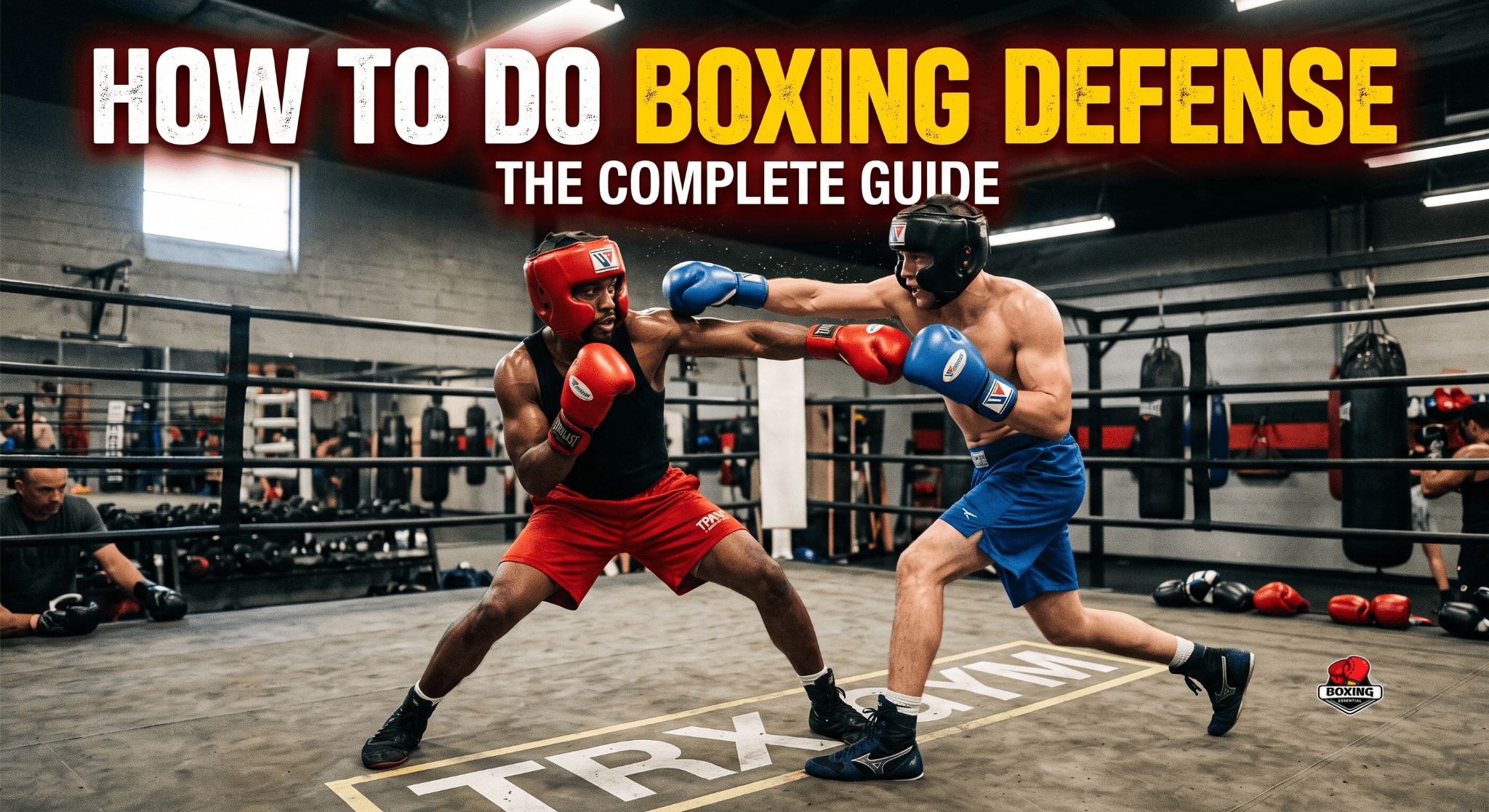
How to Do Boxing Defense The Complete Guide
If you have ever asked yourself how to do boxing defense, then you've made one of the most critical inquiries in boxing. While powerful strikes may be popularized in highlights, superior defense makes the champions. Such names as Floyd Mayweather Jr., Pernell Whitaker, Willie Pep, and Dmitry Bivol created their names through missing their opponents' blows before hitting back.